5 Surprising Truths About Matter You Did Not Know: It Is Not Just Another Smart Home Standard
2025-11-20
Ending the Chaos Era of Smart Homes
The current smart home market is filled with various brands and incompatible technical protocols, making consumers feel extremely confused and frustrated when selecting and setting up devices. To address this long-standing pain point, tech giants like Apple, Google, and Amazon have rarely joined forces to promote an industry-wide standard—Matter.
The current smart home market is filled with various brands and incompatible technical protocols, making consumers feel extremely confused and frustrated when selecting and setting up devices. To address this long-standing pain point, tech giants like Apple, Google, and Amazon have rarely joined forces to promote an industry-wide standard—Matter.
However, if you think Matter is just to make your smart bulbs and smart speakers communicate smoothly, then you are underestimating its true vision. Matter is bringing a deeper infrastructure revolution to our homes, from security architecture and energy management to network backbone, completely reshaping our definition of “smart.”
1. Century Reconciliation of Tech Giants: A Rare Collaboration
The most surprising thing about Matter is that it facilitated cooperation between the fiercest competitors in the market—Amazon, Apple, Google, Samsung, and other tech giants. This cooperation is based on a shared belief: smart home devices should be safe, reliable, and seamless. Even mainstream media found this tech industry ceasefire unbelievable.
“……...This is a rare example of large tech companies cooperating amicably.”— Wall Street Journal, Dalvin Brown
This unprecedented collaboration is crucial. For the industry, it means the costly “protocol wars” have ended, allowing resources to shift from the battle for connectivity to focusing on improving user experience and product innovation. More importantly, it ensures that Matter has the broadest market base and platform support from the start, preventing it from becoming another niche standard, fundamentally solving market fragmentation.
2. Your Home Is Part of the Future Power Grid
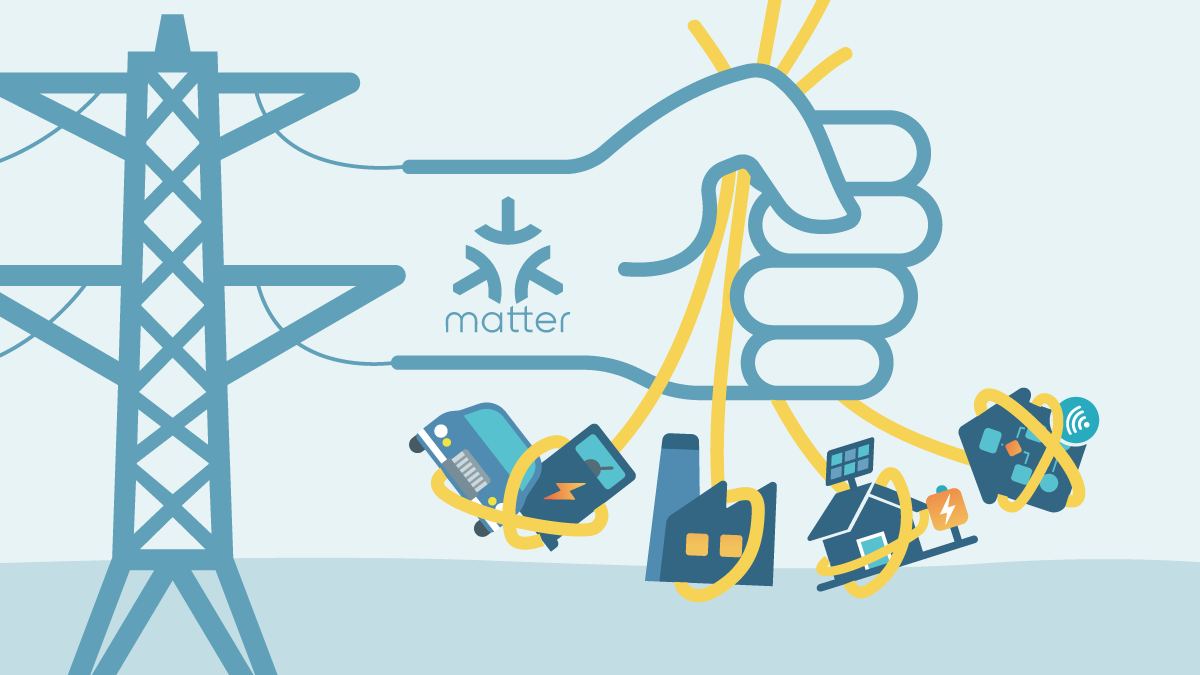
Most people think Matter is for enabling smart bulbs and smart speakers to work together. However, the surprising truth is that one of its most strategic missions is to help prevent city-scale power outages.
Matter's strategic focus has quickly expanded from basic device interoperability to smart energy management, aiming to make every home a key node for grid resilience (Grid Resilience) and virtual power plants (VPPs).
This is not a distant promise; it is already happening. Matter 1.3 laid the foundation for electric vehicle charging stations (EVSE), and the latest Matter 1.4 standard further expands it to solar panels, home batteries, heat pumps, and water heaters, providing a complete set of tools for home energy management.
Imagine this scenario: a heatwave overwhelms the city power grid. The utility company sends signals via Matter, and your home, now a smart energy node, automatically raises the thermostat by one degree, delays EV charging to 10 PM when demand is lower, and draws electricity from the home battery instead of the grid.
All of this is to collectively prevent blackouts while saving you peak electricity costs. This transformation fundamentally changes the smart home from a passive energy consumer into an active, smart participant in stabilizing the entire energy network.
3. Every Device Has a “Digital Passport”
Matter mandates enterprise-level security architecture, requiring each device to have a unique “digital passport,” also known as a Device Attestation Certificate (DAC). This “passport” is embedded when the device leaves the factory to ensure its unique identity and authenticity.
CHANGING Ciot's security experts explain in their standard analysis: “You can think of the certificate as a unique digital ID placed on the device to prove its authenticity and trustworthiness, just like a passport used in international travel.”
The operation of this “digital passport” is extremely rigorous. When you try to add a new Matter device to your home network, the system checks the authenticity of its certificate, confirming it comes from a legitimate manufacturer and has not been tampered with. This “passport” is issued through a strict “trust chain” controlled by the manufacturer and reviewed by the Connectivity Standards Alliance, ensuring the device's identity can be traced back to its origin.
This is not just password protection; it is an enterprise-level PKI security mechanism, equivalent to the technology protecting online banking and e-commerce, now built into every certified bulb and thermostat. This enterprise-level security is not merely a defensive measure; it is a necessary foundation of trust, enabling Matter to take on the next larger role: managing your home network core.
4. It Is Not Just an App, But Your Home's “Network Backbone”
Previously, users were often troubled because home Wi-Fi and various low-power devices (like locks and sensors) used different network protocols, requiring the purchase and management of bridges or hubs from multiple brands with inconsistent stability.
The release of Matter 1.4 addresses this pain point and marks a major shift in its strategic positioning. This version introduces standardization for Home Routers and Access Points (HRAP), aiming to unify management of the home's Wi-Fi and Thread, two core network technologies.
It can be understood like this: Matter is teaching your home's Wi-Fi router to speak the “Thread” language, a low-power language used by battery-powered devices. This eliminates the need for various “translation boxes,” creating a seamless, centrally managed single network for your entire home.
This breakthrough means that the Wi-Fi router, the undisputed hub of the home network, now becomes the standardized management center for all Matter traffic. Matter is no longer merely an “application layer protocol” running on your home network; it has begun deeply managing and organizing your home's core IP network as a “backbone management protocol,” laying a solid foundation for more complex smart applications in the future.
5. Market Choice: From “Number of Devices” to “Quality of Experience”
After securing the security and network infrastructure, Matter is driving a qualitative change in the market itself. A notable market trend is that although the smart home market value is growing rapidly, the average number of devices per home has decreased from 8 at its peak to 6.2.
This counterintuitive phenomenon reflects market maturity. Consumers are tired of “smart gadgets” with poor experiences that cannot work together. They no longer blindly pursue the number of devices but focus on the overall quality, reliability, and seamless integration of the experience.
This market shift from “quantity” to “quality” is not happening in parallel with Matter; Matter is the catalyst. Its strict certification process and enterprise-level PKI security architecture set higher market entry barriers, forcing low-quality gadget manufacturers out and rewarding companies that focus on truly innovative and reliable experiences. Matter's success is driving smart homes into a new stage where quality, not quantity, matters.
Embracing True Smart Living
In summary, Matter is far more than a technical standard for interoperability. It is a profound transformation around home security, energy management, and network infrastructure. From the century reconciliation of tech giants, to integrating your home into the power grid, from equipping each device with enterprise-level “digital passports” to becoming the network backbone of your home, Matter is redefining the spaces we live in.
The success of Matter will make smart homes an indispensable part of our daily lives and national energy infrastructure. It makes us think: when our homes are not only living spaces but also smart nodes in the energy network, how will our lives change?
Written by:Ciot, International Business Division, CHANGING
Contact Us
Marketing & PR Department
Tel:+886-3-563-0688
EMAIL:marcom@changingtec.com
CHANGING Information Technology Inc.
Committed to independent research and development, CHANGING strives to build a secure and convenient digital environment. Its core expertise lies in identity and authentication security for people, processes, and devices, including zero trust architecture, IoT security, FinTech cybersecurity, and digital transformation applications. With more than 28 years of professional experience, CHANGING's mission is to help various industries establish a trustworthy and secure zero trust network infrastructure. Through continuous innovation, it provides diverse products and services to meet the evolving needs of customers, working together to create a safer and more efficient digital ecosystem. In the digital age, CHANGING aims to be your most trusted partner.